
AI vs Human Jobs: What Experts Are Saying About the Future of Work
Experts weigh in on AI vs Human jobs, exploring automation, workforce changes, emerging careers, and what the future of work may look like.
The idea of artificial intelligence is no longer futuristic. It is already transforming workplaces across the United States, changing how companies operate and how employees perform their jobs. From customer service chatbots and automated data analysis to AI-powered content creation, businesses are increasingly adopting technology to improve efficiency and reduce costs.
As AI capabilities continue to advance, a major question has emerged: Will artificial intelligence replace human workers, or will it create new opportunities?
The debate over AI vs human jobs has become one of the most important workforce discussions of the decade. Business leaders, economists, technology experts, and policymakers are closely examining how AI could reshape industries and affect millions of workers.
While some experts warn about job displacement, others argue that AI will enhance productivity and create entirely new career paths. Understanding both perspectives is critical as organizations and workers prepare for the future.
Why Is the AI vs. Human Jobs Debate Important?
The rise of artificial intelligence affects more than just technology companies. AI is being integrated into healthcare, finance, manufacturing, retail, transportation, education, and countless other sectors.
For employees, the impact could influence:
- Career opportunities
- Job security
- Required skills
- Income growth
- Workplace responsibilities
For employers, AI offers opportunities to streamline operations, improve customer experiences, and gain competitive advantages.
The decisions businesses make today regarding AI adoption could shape the American workforce for years to come.
Background: How AI Entered the Workplace
The Evolution of Workplace Automation
Automation is not a new phenomenon. Factories have used machines to perform repetitive tasks for decades. Computers transformed offices in the late 20th century, eliminating some jobs while creating many others.
Today’s AI revolution differs because it affects not only manual labor but also knowledge-based work.
Modern AI systems can:
- Analyze large amounts of data
- Generate written content
- Assist with coding
- Create images and videos
- Handle customer inquiries
- Support decision-making processes
This broader reach has intensified concerns about the future role of human workers.
Recent Growth of Artificial Intelligence
The rapid development of generative AI tools has accelerated workplace adoption. Organizations are experimenting with AI to increase productivity and reduce routine workloads.
Many companies now view AI as a strategic business tool rather than a specialized technology used only by technical teams.
As a result, discussions about workforce transformation have become increasingly urgent.
What Experts Say About Job Displacement
Some Roles Face Higher Risk
Many labor economists agree that certain jobs are more vulnerable to automation than others.
Positions involving repetitive and predictable tasks may experience the greatest disruption. Examples include:
- Data entry
- Basic bookkeeping
- Administrative support
- Simple customer service functions
- Routine reporting tasks
AI systems can often perform these activities faster and at lower cost.
However, experts emphasize that job disruption does not always mean complete job elimination. In many cases, AI changes how work is performed rather than replacing workers entirely.
Historical Lessons Offer Perspective
Economists frequently compare AI adoption to previous technological revolutions.
The introduction of computers, the internet, and industrial machinery displaced some jobs but also generated new industries and employment opportunities.
Many experts believe AI may follow a similar pattern, although the speed of change could be much faster.
Jobs in Artificial Intelligence and New Career Paths.
Emerging Roles in the AI Economy
Experts point to important development potential even as certain jobs may shrink.
Organizations adopting AI require professionals who can develop, manage, monitor, and improve these systems.
Examples of emerging roles include:
- AI specialists
- Prompt engineers
- Machine learning engineers
- AI compliance professionals
- Data scientists
- AI trainers
- Human-AI collaboration managers
Many of these positions did not exist at scale just a few years ago.
Demand for Technical and Nontechnical Skills
Not all future AI-related jobs will require advanced programming knowledge.
Businesses increasingly need professionals who understand how to integrate AI into workflows, communicate insights, and manage organizational change.
This creates opportunities for workers from diverse educational and professional backgrounds.
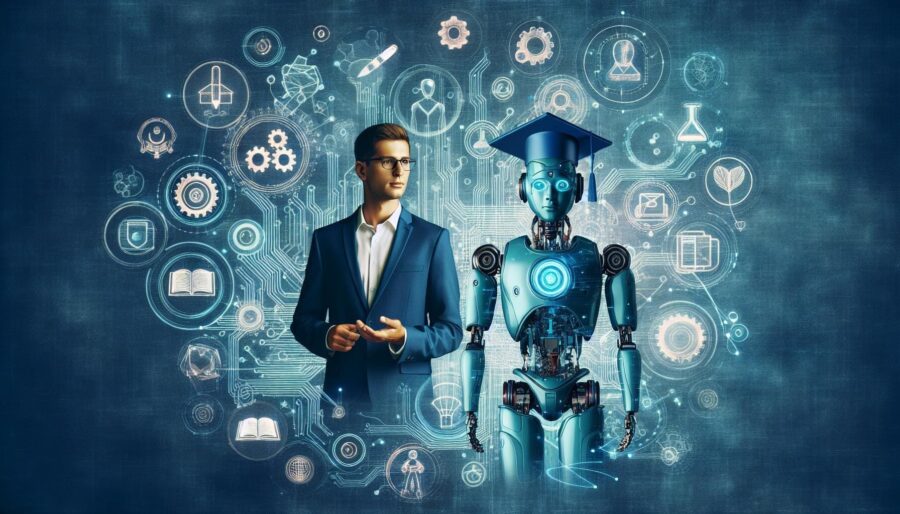
AI vs Human working together are the future of work.
AI as a Helper Rather Than a Substitute
A growing number of experts argue that AI is most effective when paired with human expertise.
Rather than replacing employees entirely, AI often acts as a productivity tool that handles repetitive tasks while humans focus on higher-value responsibilities.
For example:
- Doctors can use AI to analyze medical images.
- Lawyers can use AI to review documents.
- Marketers can use AI to generate content ideas.
- Financial professionals can use AI to identify trends.
In each case, human judgment remains essential.
Human Oversight Remains Critical
AI systems can make mistakes, generate inaccurate information, or produce biased outcomes.
Experts consistently stress the importance of human oversight.
Workers who can effectively supervise AI systems may become increasingly valuable in the labor market.
AI Automation Impact Across Major Industries
Healthcare
Healthcare organizations are using AI for diagnostics, scheduling, patient communication, and administrative tasks.
While AI can improve efficiency, experts believe human healthcare professionals will remain indispensable due to the need for empathy, trust, and complex decision-making.
Manufacturing
Manufacturing has long embraced automation. AI is helping optimize production processes, predict maintenance needs, and improve quality control.
Workers increasingly focus on managing and maintaining advanced systems rather than performing repetitive manual labor.
Finance
AI is used by financial organizations for investment analysis, risk assessment, fraud detection, and customer service.
Experts expect AI to augment financial professionals rather than replace them entirely.
Retail
Retailers use AI to manage inventory, personalize shopping experiences, and forecast demand.
Employees continue to play important roles in customer service, operations, and relationship-building.
Workforce Transformation: Skills That Matter Most
Technical Skills Continue to Grow in Importance
As AI adoption expands, digital literacy becomes increasingly valuable.
Workers who understand AI tools and data analysis may gain a competitive advantage in the job market.
Important technical skills include:
- Data interpretation
- AI tool management
- Digital communication
- Software proficiency
- Analytical thinking
Human Skills in the AI Era
Interestingly, experts say uniquely human abilities may become even more important.
These include:
- Creativity
- Leadership
- Emotional intelligence
- Critical thinking
- Adaptability
- Communication
- Problem-solving
AI can process information quickly, but it cannot fully replicate human relationships, empathy, and nuanced judgment.
What Happens Next?
The next decade will likely determine how deeply AI transforms the workforce.
Several developments are expected:
Increased AI Adoption
Businesses across industries will continue integrating AI into daily operations.
Expanded Workforce Training
Companies and educational institutions are investing in upskilling programs to help workers adapt to new technologies.
Policy and Regulation Discussions
Government leaders are increasingly examining how AI may affect employment, privacy, and economic stability.
Evolution of Job Descriptions
Many existing jobs will change rather than disappear. Workers who embrace continuous learning may be better positioned for success.
Experts generally agree that adaptability will be one of the most important career advantages in the coming years.
Frequently Asked Questions
1. Will AI replace most jobs?
Most experts do not believe AI will replace most jobs entirely. Instead, AI is expected to automate specific tasks while changing how many jobs are performed.
2. Which occupations are most at risk from AI?
Jobs involving repetitive, predictable tasks are generally considered more vulnerable to automation than roles requiring creativity, complex judgment, or interpersonal skills.
3. What new jobs will AI create?
AI is expected to create opportunities in machine learning, AI governance, data science, system oversight, training, and technology integration.
4. How can workers prepare for AI-driven changes?
Workers can develop digital skills, learn how to use AI tools, strengthen critical thinking abilities, and pursue ongoing professional education.
5. Are human skills still valuable in an AI-driven workplace?
Yes. Creativity, communication, leadership, empathy, and problem-solving remain highly valuable and difficult for AI systems to replicate.
Conclusion
The conversation surrounding AI vs human jobs is far more complex than simple predictions of widespread job loss or technological dominance. Experts increasingly view artificial intelligence as a transformative force that will reshape work rather than eliminate the need for human workers altogether.
While automation may disrupt certain occupations, it is also expected to create new opportunities, improve productivity, and redefine workplace responsibilities. The workers most likely to succeed in this changing environment will be those who adapt, learn new skills, and leverage AI as a tool rather than view it solely as a competitor.
The future of work will likely involve closer collaboration between humans and machines. As businesses continue investing in artificial intelligence, the most valuable employees may be those who combine technological understanding with uniquely human strengths such as creativity, empathy, communication, and strategic thinking.
The AI revolution is already underway, and the choices made by workers, employers, and policymakers today will help determine how its benefits are shared across the economy in the years ahead.