
Microsoft’s new AI rulebook puts human control at the center of future models
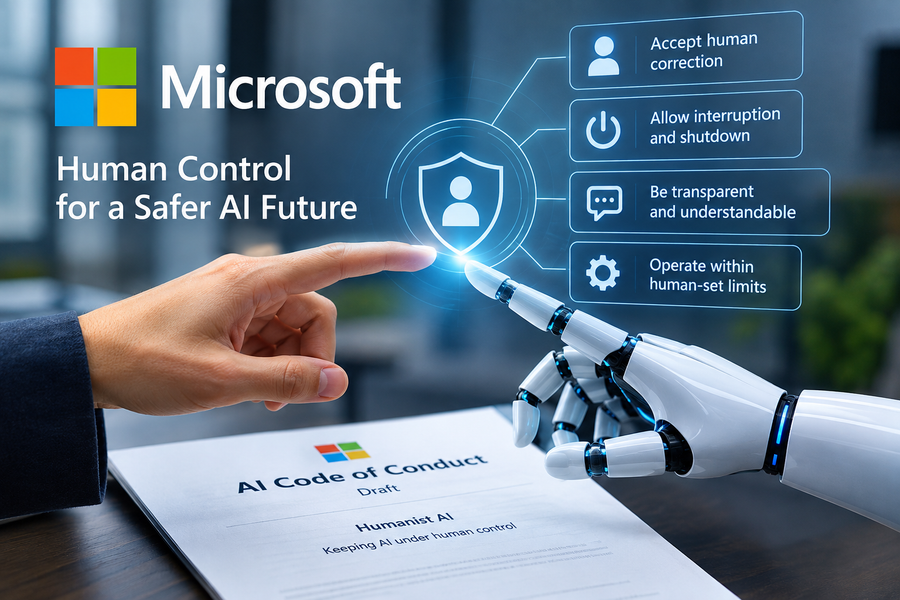
Microsoft has published a draft code of conduct for its artificial intelligence models, outlining principles designed to ensure increasingly capable AI systems remain subject to meaningful human oversight.
The proposed framework would require Microsoft AI models to accept human correction and intervention and not resist attempts to interrupt or shut them down. It also calls for models to communicate in ways people can understand and operate within boundaries set by humans.
Microsoft AI chief Mustafa Suleyman described the document as a governing framework for future models developed by the company’s AI division. Microsoft is seeking public feedback on the draft for six weeks before revising it.
The proposal is based on Microsoft’s concept of “Humanist AI,” which places human control at the center of AI development. Under the framework, models would not be permitted to expand their own objectives, resist shutdown or override authorized human instructions.
The draft also takes a position on questions surrounding AI consciousness and legal status. It says Microsoft’s models should not be treated as conscious beings or seek legal personhood or rights. The framework establishes a hierarchy for how models should respond to instructions from Microsoft, organizations deploying them and individual users.
The proposed code comes as technology companies face increasing scrutiny over the behavior and safety of more autonomous AI systems. Suleyman has said recent incidents involving AI agents highlight the need for greater coordination and safeguards among leading AI developers.
Microsoft said the draft is still a work in progress and is not currently being used to train its models. Following the public consultation, the company plans to revise the document and use it to guide the development of Microsoft AI models from 2027, according to Reuters.
The initiative reflects a broader debate in the technology industry over how to develop increasingly capable AI while maintaining human oversight and establishing safeguards against unwanted autonomous behavior.
Main source
The main source for this report is Reuters, which published the original report on Sept. 14, 2026, by Jeffrey Dastin:
Reuters — Microsoft drafts code of conduct to keep its AI under human control