


Venezuela Earthquake 2026 Death Toll Rises as Rescuers Search for Survivors
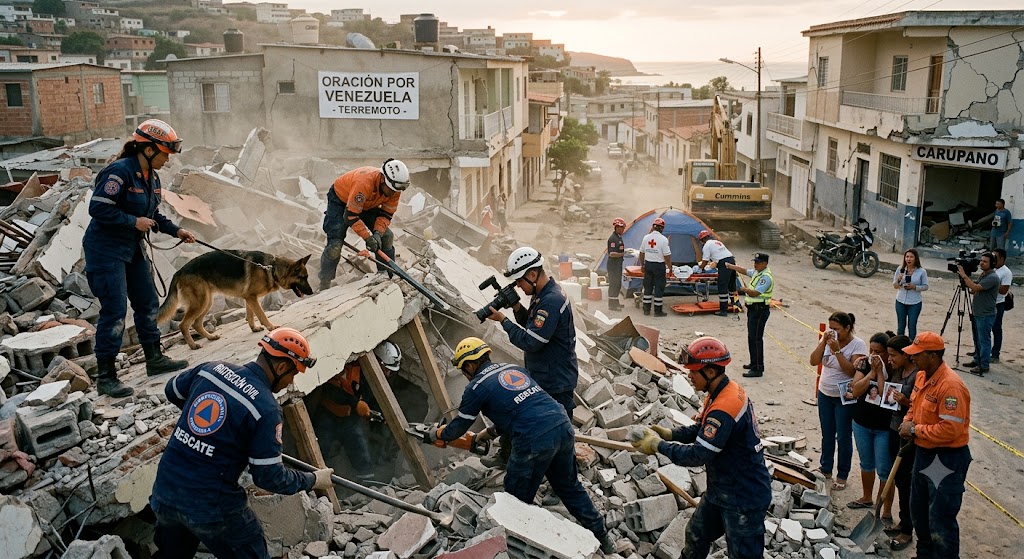
CARACAS, Venezuela (AP) — Rescue crews continued searching through collapsed buildings Friday after two powerful earthquakes struck northern Venezuela, killing hundreds of people, injuring thousands, and leaving many more unaccounted for in one of the country’s deadliest natural disasters in more than a century.
Authorities said the casualty count continued to rise as emergency workers reached heavily damaged neighborhoods. Officials cautioned that the number of deaths and injuries could increase further because rescue operations remained underway and many communities had not yet been fully assessed.
The earthquakes, measuring magnitudes 7.2 and 7.5, struck within seconds of each other on Wednesday evening. According to the U.S. Geological Survey, the epicenter was near Morón, about 160 kilometers (100 miles) west of Caracas, along the San Sebastián fault system. The back-to-back earthquakes generated intense shaking across northern Venezuela and were felt in neighboring countries.
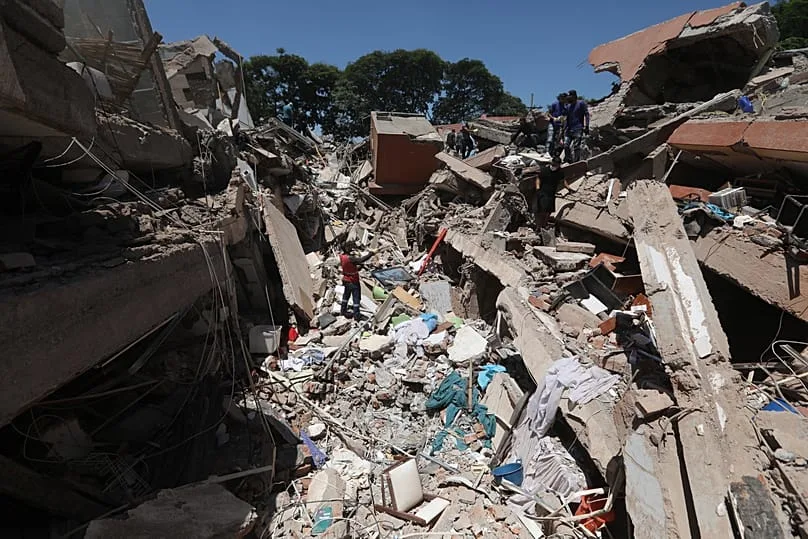
The most serious damage was reported in La Guaira state and parts of Caracas, where apartment buildings, hotels, schools, and public facilities collapsed or suffered major structural damage. Emergency officials said roads, bridges, and utilities also sustained significant damage, slowing rescue efforts and limiting access to some affected communities.
Search-and-rescue teams worked through the night using heavy machinery, drones, trained dogs, and specialized listening equipment to locate survivors trapped beneath collapsed buildings. Volunteers joined firefighters, police officers, military personnel, and international rescue specialists in removing debris by hand where equipment could not reach.
Repeated aftershocks complicated rescue operations. Engineers inspected damaged buildings while authorities warned residents to avoid unstable structures because additional collapses remained possible.
Hospitals in Caracas and the surrounding areas treated thousands of injured people. Medical centers established emergency triage areas to accommodate the growing number of patients, while health officials appealed for blood donations and additional medical supplies.
Temporary shelters opened in schools, sports complexes, and community centers to house residents whose homes were destroyed or deemed unsafe. Relief agencies distributed food, drinking water, blankets, hygiene supplies, and emergency medical assistance to displaced families.
The Venezuelan government declared a state of emergency in the affected regions and mobilized military and civil defense personnel to support rescue and relief operations. Officials said security forces were deployed to protect damaged neighborhoods, assist with logistics, and help maintain public order as humanitarian assistance arrived.
Authorities urged residents to remain alert because aftershocks were expected to continue for several days. Emergency management officials advised people to stay away from damaged buildings and follow official evacuation instructions when necessary.
International assistance expanded as rescue teams and humanitarian aid arrived from several countries. The United States, Mexico, Spain, Brazil, Colombia, and other nations offered search-and-rescue personnel, medical teams, emergency supplies, and technical support. International organizations, including the International Federation of Red Cross and Red Crescent Societies, launched emergency appeals to assist recovery efforts.
Foreign rescue specialists coordinated with Venezuelan emergency responders to search damaged buildings, provide structural engineering expertise, and support medical operations. Aid agencies also began delivering water purification equipment, temporary shelter materials, and emergency health supplies.
The earthquakes disrupted transportation and communications throughout the region. Several highways were blocked by landslides and debris, while power outages affected thousands of homes and businesses. Authorities temporarily suspended operations at some transportation facilities while engineers assessed infrastructure damage.
Although Venezuela’s major oil facilities reportedly escaped significant structural damage, prolonged power outages and transportation disruptions could affect production and distribution in the coming days. Energy companies continued evaluating facilities as inspections progressed.
Residents described scenes of panic as buildings shook violently and power failed across neighborhoods. Many families spent the night outdoors, fearing additional aftershocks and uncertain whether their homes remained safe.
Community volunteers played a critical role during the initial hours after the disaster. In several neighborhoods, residents used shovels, picks, and their bare hands to search for trapped neighbors before heavy rescue equipment arrived. Local organizations also established collection centers for food, clothing, and emergency supplies.
Disaster specialists said Venezuela’s economic challenges and aging infrastructure may complicate recovery efforts. Many public buildings and residential structures were constructed before modern seismic building standards became widespread, increasing their vulnerability during strong earthquakes.
Seismologists said Venezuela lies along the boundary between the Caribbean and South American tectonic plates, making parts of the country vulnerable to earthquakes. Although large earthquakes occur less frequently in Venezuela than in some other parts of Latin America, experts said the region remains susceptible to significant seismic events because of active fault systems.
Earthquake scientists emphasized that earthquakes cannot be predicted. However, they said that stronger building codes, improved emergency planning, public education, and investment in resilient infrastructure can significantly reduce casualties and economic losses during major earthquakes.
Humanitarian organizations warned that immediate rescue efforts will likely transition into a long-term recovery operation involving housing reconstruction, infrastructure repairs, restoration of public services, and economic assistance for affected communities. Thousands of people may require temporary housing for weeks or months while engineers inspect damaged structures and rebuilding begins.
Mental health professionals also stressed the importance of psychological support for survivors, first responders, and families searching for missing relatives. Counseling services and community support programs are expected to become an important part of the recovery process.
Government agencies continued damage assessments across the affected region while emergency responders searched for survivors in dozens of collapsed structures. Officials said heavy equipment, additional rescue personnel, and humanitarian aid would continue arriving as recovery operations expanded.
The disaster represents one of the most significant earthquakes to strike Venezuela in modern history and has prompted renewed discussion about disaster preparedness, infrastructure resilience, and emergency response capacity. Engineers and disaster management experts said investments in earthquake-resistant construction and coordinated emergency planning will be essential as the country begins the lengthy process of rebuilding.
As rescue efforts entered another day, authorities said saving lives remained the highest priority. Emergency crews continued working around the clock despite difficult conditions, while families waited anxiously for news of missing relatives. said that the full extent of the disaster may not be known until search operations are completed and damage assessments reach every affected community. Venezuela Earthquake 2026,Venezuela Earthquake 2026
Main News Sources
- Reuters – Venezuelans race to find survivors as foreign rescuers join search
- Associated Press – Things to know about Venezuela’s powerful earthquakes
- Associated Press – Photos show rescue efforts across earthquake-ravaged Venezuela
Official Scientific Source
- U.S. Geological Survey (USGS) – Earthquake Information Program
- Venezuela Earthquake 2026,Venezuela Earthquake 2026Venezuela Earthquake 2026