
Michigan Senate Primary: A Defining Moment for the Democratic Party’s Future
Progressive Abdul El-Sayed is leading in polls against centrist Haley Stevens as the party seeks to regain control of the US Senate.
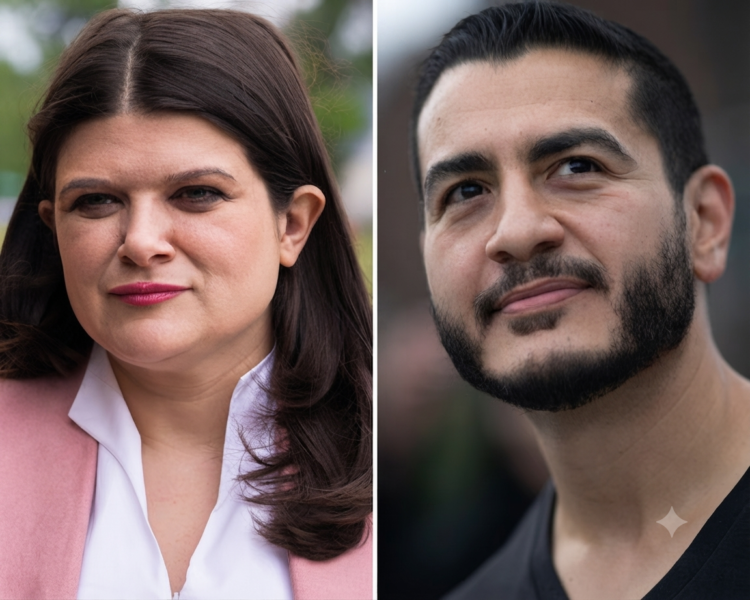
As Michigan voters head to the polls on Tuesday, the stakes are incredibly high for the Democratic Party. This crucial Senate primary features progressive Abdul El-Sayed competing against centrist Haley Stevens. The result could greatly shape the party’s future following losses during the Trump era and its efforts to regain influence in Washington.
The Michigan Democratic primary comes at a time when the party grapples with its identity, seeking to balance the demands of its progressive base against the needs of moderates. El-Sayed, a 41-year-old former public health official, represents the party’s left wing, advocating for ambitious policies such as universal healthcare. In contrast, Stevens, who is 43 and has made a name for herself as a centrist after flipping a Republican seat to win her congressional seat in 2018, embodies the establishment’s approach.
Recent polling shows El-Sayed leading Stevens, marking a significant moment for progressives who have gained momentum in Democratic primaries across the nation, particularly in historically blue regions. This election serves as a microcosm of a larger battle that the Democratic Party faces: how to navigate its future amidst varied voter expectations and growing division within its ranks.
As more than $40 million floods into the race, much of it from outside groups, it is evident that this election has drawn national attention. Notably, pro-Israel organizations associated with the American Israel Public Affairs Committee (AIPAC) have ramped up their spending to bolster Stevens and challenge El-Sayed. This influx of funding underscores the broader ideological struggle within the party and the increasing influence of external entities in local races.
The winner of this Democratic primary will move on to face Republican Mike Rogers, a former congressman who previously ran for the Senate in 2024 but lost to Democratic candidate Elissa Slotkin. With Republicans currently controlling 53 of the 100 Senate seats, the Michigan election is crucial for Democrats hoping to regain a foothold in the upper chamber of Congress.
Michigan is not isolated in its political significance; other states also hold primaries on Tuesday. In Missouri, voters will determine whether to nominate Cori Bush, a former US representative seeking a return to Congress, or competitor Wesley Bell. The race is notably charged by heightened concerns about the ongoing conflict in Gaza and is also marked by significant spending from pro-Israel groups.
Furthermore, Washington state voters will select candidates in the third congressional district, where incumbent blue-dog Democrat Marie Gluesenkamp Perez faces challengers from both ends of the political spectrum. This is particularly important as the Democratic Party assesses the effectiveness of its moderates against progressive candidates in a rapidly evolving political climate.
Back in Michigan, several congressional seats are at stake, including one in Slotkin’s former district. The results will provide critical insights into the trajectory of the party as it endeavors to reclaim congressional control from Republicans. The rise of progressive candidates like El-Sayed and others in various congressional races epitomizes a broader trend within the party, reflecting grassroots dissatisfaction with traditional Democratic strategies.
Notably, Bernie Sanders, the progressive icon, has thrown his considerable weight behind El-Sayed, as well as in support of other progressive candidates across Michigan. His endorsements include William Lawrence, a community organizer and co-founder of the Sunrise Movement, who is running in the Lansing-area seventh district, and Donavan McKinney, a state representative challenging incumbent Shri Thanedar in the 13th district encompassing parts of Detroit.
On the Republican side, the Michigan primary also presents a pivotal moment as the GOP decides between John James, a US representative backed by Donald Trump, and businessman Perry Johnson, both vying to challenge Jocelyn Benson, the incumbent secretary of state and likely Democratic nominee for governor. James leads in polls, but Johnson’s late surge indicates a potential shift in momentum, complicating Republicans’ path to the governorship.
Governor Gretchen Whitmer, who served two terms and is now precluded from seeking re-election due to term limits, leaves a significant legacy and raises further questions about the party’s future leadership in the state.
As primary day approaches, all eyes are on Michigan, a crucial battleground state that symbolizes the ongoing battle within the Democratic Party. Will voters opt for a progressive vision with Abdul El-Sayed, or will they lean towards the centrist platform embodied by Haley Stevens? Whichever direction the primary takes, it will serve as a defining moment for the Democratic Party as it strategizes its comeback in the 2024 elections and beyond.
The implications of this election extend beyond the state of Michigan, compelling national observers to scrutinize the evolving dynamics within the Democratic Party and what this means for American politics as a whole. Voter turnout and engagement in the primary will set the tone for the upcoming elections, highlighting the significant role that grassroots movements and ideological battles play in shaping the future of the party.