


Elon Musk’s $16.8 Billion Terafab in Texas Could Become the World’s Largest Building
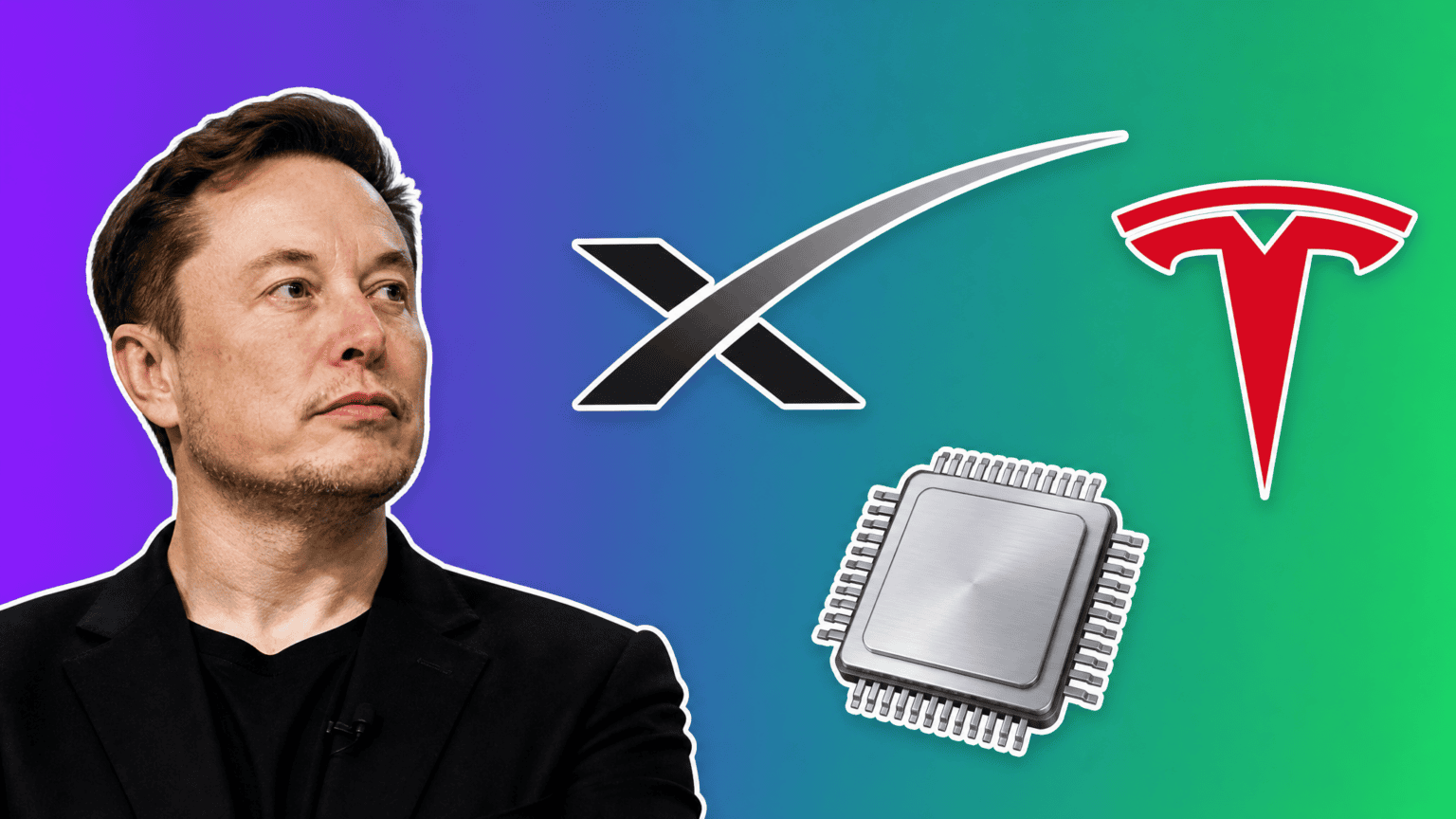
Elon Musk is planning one of the most ambitious semiconductor manufacturing projects ever proposed, with SpaceX and Tesla developing a massive chip-production complex in Grimes County, Texas, that could eventually span about 100 million square feet.
The project, known as Terafab, is designed to bring semiconductor manufacturing, memory production, advanced packaging and testing into a single vertically integrated operation. The companies say the facility will be built to meet the enormous computing requirements expected from artificial intelligence, autonomous vehicles, humanoid robots and future space-based computing systems.
At its full planned scale, Terafab would be roughly ten times the size of Tesla’s approximately 10-million-square-foot Gigafactory Texas and could become one of the largest industrial structures ever built. Terafab’s own website describes a 100-million-square-foot facility targeting production at a scale of more than one terawatt of compute annually.
The first phase carries an announced capital investment of more than $16.8 billion and is expected to create at least 3,000 jobs, according to reporting on the project and statements from Texas officials. Reuters reported that the full project could eventually require substantially more investment if later expansion phases proceed.
Terafab Is Designed to Bring Chip Production Under One Roof
Unlike a conventional semiconductor facility focused primarily on wafer fabrication, Terafab is being conceived as a vertically integrated manufacturing campus.
The project is intended to combine logic chips, memory, advanced packaging and testing within the same broader operation. The goal is to give Musk’s companies greater control over a critical part of their technology supply chain as demand for computing power continues to grow.
Terafab’s official website says the facility will produce AI chips at scale for applications both on Earth and in space. Its stated targets include more than 1 billion Tesla Optimus robots; 10 million tons of material launched into orbit annually and more than 1 terawatt of solar power in the company’s longer-term vision.
The scale of those ambitions illustrates why Musk’s companies are pursuing semiconductor manufacturing internally rather than relying entirely on outside suppliers.
A 100-Million-Square-Foot Industrial Giant
The most striking number associated with Terafab is its proposed size.
At approximately 100 million square feet, the planned complex would be several times larger than many of the world’s largest individual buildings. It would also dwarf Tesla’s existing manufacturing footprint in Texas.
Terafab’s website directly compares the planned facility with Tesla’s Gigafactory Texas, listing the Austin-area factory at roughly 10 million square feet and Terafab at 100 million square feet.
That comparison puts the project into perspective: Musk is not simply proposing another semiconductor plant. He is envisioning an industrial complex on a scale normally associated with entire manufacturing districts.
The facility is expected to support the production of advanced chips for a growing ecosystem of Musk-led technologies, including Tesla’s artificial-intelligence systems, Optimus humanoid robots and autonomous vehicles, as well as SpaceX’s plans for computing infrastructure beyond Earth.
SpaceX and Tesla See a Growing Need for AI Chips
The strategic motivation behind Terafab is the rapidly increasing demand for computing power.
Musk’s companies are pursuing projects that require enormous amounts of specialized computing hardware. Tesla is developing autonomous driving systems and humanoid robots, while SpaceX is exploring space-based computing and other large-scale AI infrastructure.
Terafab’s stated objective is to produce more than 1 terawatt of compute annually, a figure intended to illustrate the enormous scale of future chip demand envisioned by Musk’s companies.
The project therefore represents more than an attempt to manufacture chips. It is part of a broader strategy to build an integrated technology supply chain capable of supporting artificial intelligence, robotics, transportation and space infrastructure.
Grimes County Becomes the Center of Musk’s Chip Ambitions
Terafab is planned for Grimes County, Texas, expanding Musk’s already significant industrial presence in the state.
Texas has increasingly positioned itself as a destination for semiconductor manufacturing, advanced technology and large industrial investments. Terafab adds another major project to that growing technology ecosystem.
The Texas Comptroller’s public records confirm that TeraFab AI, LLC has submitted applications under the state’s Jobs, Energy, Technology and Innovation, or JETI, program for the Grimes County project. One application identifies the project as the “TERAFAB – Advanced Manufacturing Campus” and lists Anderson-Shiro Independent School District as the relevant school district.
The JETI program allows qualifying projects to seek a limitation on taxable value for school-district maintenance and operations property taxes. The state says the program is intended to help Texas attract investment and jobs while imposing statutory investment and employment requirements.
Tax Incentives Are Part of the Texas Expansion Strategy
The scale of Terafab comes with an equally significant price tag, making tax incentives an important part of the project’s economics.
Documents submitted under the JETI program state that the proposed tax limitation would reduce the project’s effective tax burden by approximately 48 percent. The application says property-tax costs are a major recurring difference between Texas and competing locations, including jurisdictions in Arizona, New Mexico and Nevada.
The application process is not an automatic approval. Under Texas rules, the Comptroller reviews the proposal before recommendations can move forward, and both the governor’s office and the relevant school district must provide favorable determinations before a JETI agreement can be executed.
That makes the tax arrangements an important part of the project’s financial and political story as Texas weighs the potential economic benefits against the public revenue involved.
Texas Wants to Keep Musk’s Technology Empire Growing
Texas officials have welcomed Terafab as another major investment in the state’s technology and manufacturing economy.
The project follows years of expansion by Musk’s companies in Texas, including Tesla’s manufacturing operations near Austin and SpaceX’s growing presence elsewhere in the state.
For Texas, Terafab offers the prospect of thousands of jobs, substantial construction activity and a major addition to the state’s semiconductor ambitions.
For Musk, the project provides something potentially even more valuable: greater control over the hardware needed to power his companies’ future plans.
The Project Could Become Much More Expensive
Although the headline figure is $16.8 billion, that amount represents the initial investment rather than the potential final cost of Terafab.
Reuters reported that the project could eventually reach roughly $119 billion if all proposed expansion phases are completed. That makes Terafab not only a massive construction project but also one of the largest long-term industrial bets associated with Musk’s companies.
The distinction is important because the 100-million-square-foot vision represents the potential full scale of the development rather than a single completed phase.
The project will therefore have to progress through multiple stages before its ultimate size and production capacity become reality.
Terafab Fits Into Musk’s Bigger Space and AI Vision
Musk has increasingly linked artificial intelligence and space exploration in his long-term plans.
Terafab’s official website presents chip manufacturing as a foundational part of that vision. The company argues that producing AI chips at massive scale could help support computing infrastructure on Earth while eventually enabling large-scale computing systems in space.
The concept reflects Musk’s broader belief that future AI demand could eventually exceed the capacity of conventional terrestrial infrastructure.
Space-based computing is still an emerging concept, but Terafab is being designed around the assumption that demand for processors, memory and AI hardware will continue accelerating.
A Massive Bet on America’s Semiconductor Future
Terafab also arrives at a time when semiconductor manufacturing has become an increasingly important strategic priority for the United States.
Advanced chips are essential to artificial intelligence, autonomous vehicles, robotics, telecommunications and defense technologies. Much of the world’s most advanced semiconductor manufacturing remains concentrated among a relatively small number of companies and regions.
Musk’s approach is to build a large portion of the required supply chain internally.
If Terafab reaches its proposed scale, the project would give SpaceX, Tesla and their technology partners an unusually large domestic manufacturing base for advanced computing hardware.
What Happens Next?
The immediate focus will be on construction and the development of the project’s initial manufacturing capabilities.
The Texas Comptroller’s records show that the Terafab project is already moving through the state’s incentive and approval processes.
But turning a 100-million-square-foot semiconductor vision into an operating facility will require enormous amounts of capital, infrastructure, specialized equipment and engineering expertise.
For now, Terafab remains one of the most ambitious industrial projects in Musk’s expanding technology empire.
If the full vision becomes reality, the Texas facility would not simply be another chip factory. It would represent a massive attempt to build an integrated manufacturing engine for AI, robotics, autonomous transportation and space computing—all from a single Texas industrial complex.
And at 100 million square feet, Terafab could make Musk’s latest Texas project quite literally one of the biggest buildings on Earth.