



The Exciting Future of AI Video Generation: Innovation, Opportunity, and Growth, What Comes Next for Creators and Businesses
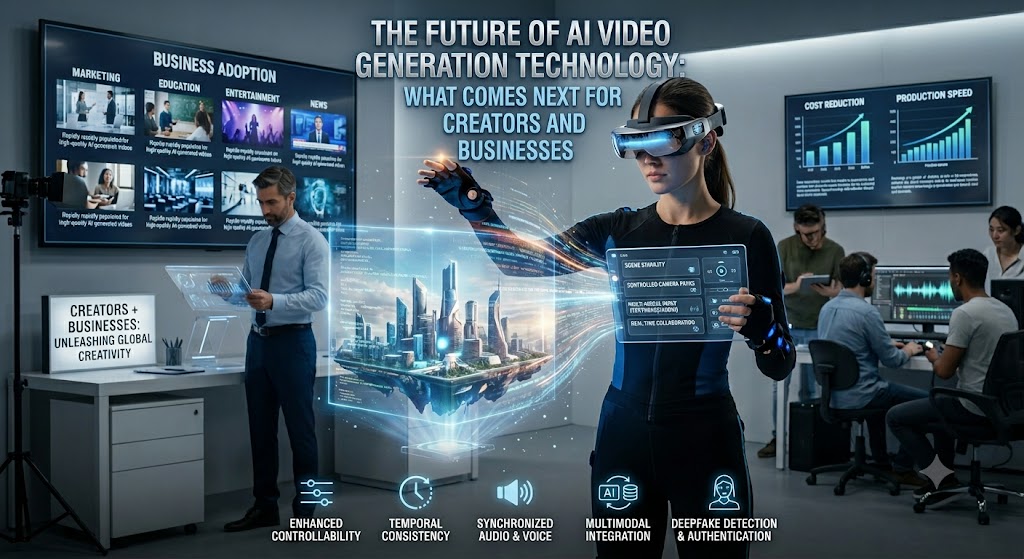
AI Video Generation Technology’s Future.
AI video generation technology is moving from novelty to infrastructure.
Not long ago, creating a polished video required cameras, lighting, actors, editors, sound designers, and weeks of production work. Today, a growing number of AI video generators can turn written prompts, still images, or rough footage into short videos with movement, cinematic camera angles, visual effects, and increasingly realistic sound.
The results are not perfect. But they are improving fast.
For U.S. businesses, creators, educators, marketers, and media companies, the future of AI video generation technology could reshape how visual content is produced and distributed. It may lower costs, speed up creative work, and make professional-looking videos available to far more people. It will also raise difficult questions about copyright, misinformation, jobs, and trust.
The next phase will not simply be about making AI videos look more realistic. It will be about making them more controllable, safer, easier to edit, and more useful in real-world workflows.
Why AI Video Generation Matters
Video is already one of the most powerful forms of online communication. It drives social media engagement, product marketing, online learning, entertainment, customer support, and political messaging.
Yet video production remains expensive and time-consuming. A small business may struggle to afford a commercial. A teacher may not have the resources to create custom visual lessons. A local news organization may have limited staff for graphics and explainers.
Generative AI video tools could change that equation.
Instead of starting with a full production crew, a user may begin with a script, a storyboard, brand assets, and a set of instructions. AI can then help create background scenes, product demonstrations, animated explainers, visual effects, translated versions, and early drafts.
That does not mean human creators become unnecessary. The contrary may often be true. As production becomes easier, creative judgment becomes more valuable. The people who can tell strong stories, verify facts, manage a brand, and make ethical decisions may become even more important.
A Quick Background on Text-to-Video Technology
AI video generation grew out of advances in image generation, machine learning, and large-scale multimodal models.
Early tools could create short, often unstable clips. Objects changed shape. People moved unnaturally. Background details shifted from frame to frame. A character might have a different face or outfit halfway through a scene.
Newer systems are improving at “temporal consistency,” which means maintaining a more stable visual world across multiple frames. They are also getting better at interpreting prompts, simulating camera movement, generating human motion, and combining audio with visuals.
The industry is now moving beyond simple text-to-video prompts.
Many platforms support image-to-video generation, where a user uploads a reference image and asks the system to animate it. Others are building controls for camera movement, character references, motion transfer, scene extension, and editing specific parts of a generated clip.
Researchers are also exploring video models as early forms of “world models” that can learn patterns of movement, spatial relationships, cause and effect, and physical interactions. That long-term direction could influence entertainment, training simulations, robotics, virtual reality, and education.
Recent Developments in AI Video Generation
The competitive race in AI video has accelerated sharply.
Major technology companies and specialized startups are investing in models that can generate more realistic clips, improve motion, and reduce the cost of experimentation. The focus is shifting from one-off viral videos to tools that fit into professional production pipelines.
Better Video and Synchronized Audio
One of the biggest changes is the push toward video and sound generation in the same workflow.
Earlier AI video tools often produced silent footage. Users had to add narration, music, dialogue, and sound effects separately. Newer systems are increasingly designed to create audio that matches the action on screen, including ambient sounds, effects, and in some cases spoken dialogue.
That matters because sound is central to whether a video feels believable. A visually impressive clip can still feel artificial if the voices, timing, and background audio do not match.
More Control for Creators
The next generation of AI filmmaking tools is likely to focus heavily on control.
Creators do not just want a random clip that looks good. They want a reliable way to direct a scene. They may need a product to remain visually accurate, a character to look consistent across multiple shots, or a camera to follow a precise path.
That is why AI video platforms are adding features such as reference images, shot planning, scene-by-scene generation, motion controls, and editing tools. The winning products may not be the ones that generate the flashiest single clip. They may be the ones that allow users to revise a video without starting over.
Growing Business Interest
The business opportunity is attracting serious investment.
AI video startup Higgsfield, which focuses on marketing-oriented video workflows, reached a valuation exceeding $1.3 billion after raising an $80 million extension round in early 2026. Its growth reflects demand for tools that help businesses produce more content at lower cost, especially for social media marketing.
The signal is clear: companies are not only experimenting with AI video. They are building commercial products around it.
How AI Video Could Change Major Industries
Marketing and Advertising
Marketing may be one of the earliest and largest use cases.
Brands already need a constant flow of video for social platforms, product pages, email campaigns, and digital ads. AI can help develop many versions of a campaign for different audiences, locations, languages, and formats.
For example, a retailer could produce short product videos for seasonal promotions without filming every variation from scratch. A national brand could quickly test several creative concepts before investing in a larger shoot.
The key limitation is brand safety. Businesses will need to ensure that AI-generated products, people, and claims are accurate. A polished video that misrepresents a product can create legal and reputational risk.
Entertainment and Film Production
Hollywood is unlikely to become fully automated, but AI will become part of more production workflows.
AI may help with concept art, storyboards, previsualization, background plates, visual effects, dubbing, and low-cost test scenes. Independent filmmakers could use it to visualize ideas that once required large budgets.
At the same time, entertainment companies face major concerns over performer likenesses, copyrighted characters, training data, and creative ownership. Recent partnerships between major technology firms and film companies show that AI is becoming a serious strategic issue for the entertainment industry, not just an experimental tool.
Education and Training
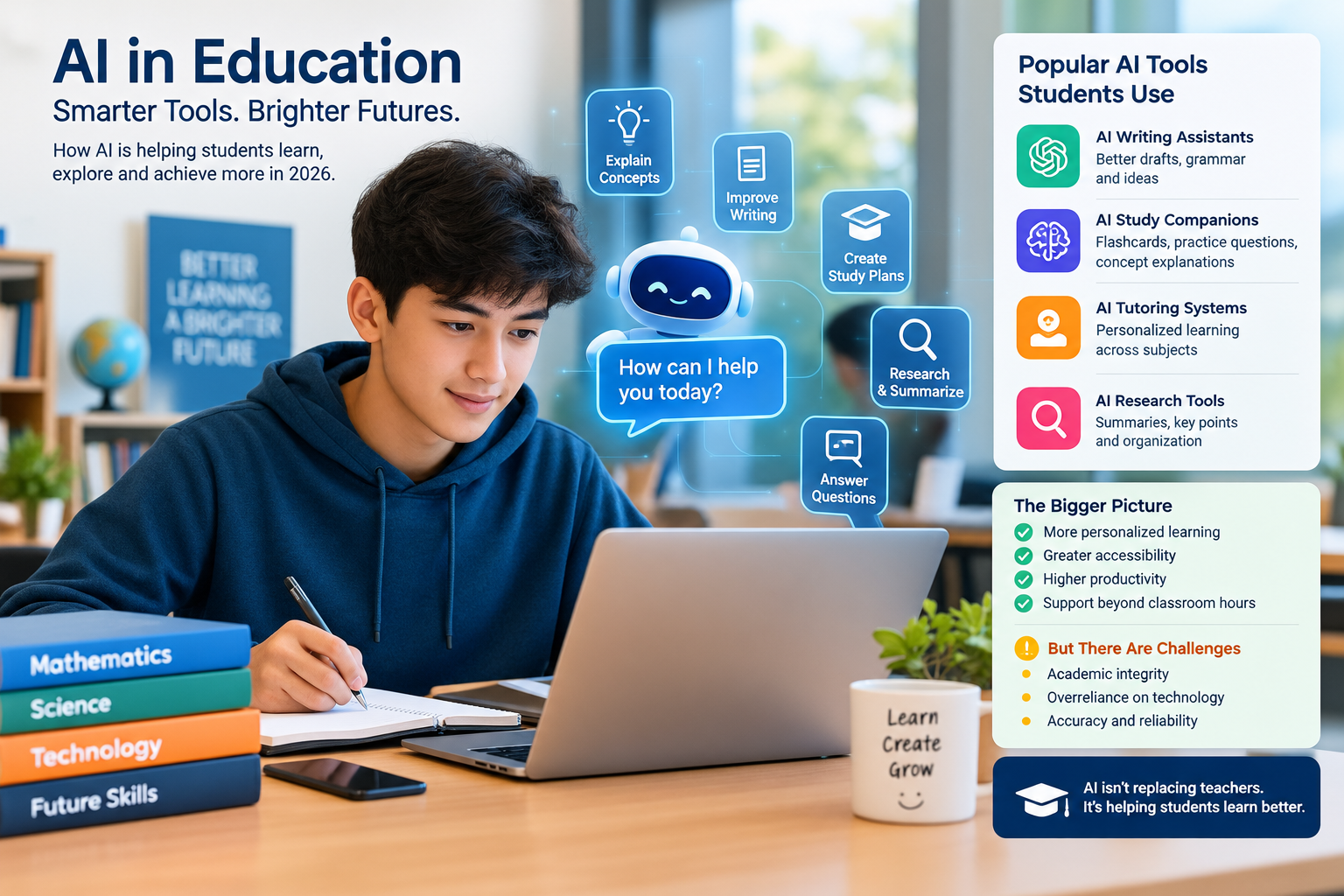
AI-generated video could make learning more visual and personalized.
Schools, colleges, employers, and public agencies could create short simulations, demonstrations, and explainers tailored to specific audiences. A science lesson could show a customized animation of a chemical reaction. A workplace training program could generate scenario-based safety videos.
The opportunity is especially strong for organizations that need frequent updates. Instead of rerecording an entire training video when a policy changes, teams may be able to revise a script and regenerate selected scenes.
News and Information
Newsrooms may use AI video for graphics, explainers, translations, and visual reconstructions. But journalism will require stricter safeguards than most other industries.
News organizations must clearly distinguish between real footage and synthetic visuals. A generated reconstruction can help explain a story, but it should never be presented as authentic documentation of an event.
For U.S. audiences, transparency will be essential. Labels, editorial standards, and source verification will determine whether AI video strengthens journalism or damages public trust.
The Risks: Deepfakes, Copyright, and Misinformation
The future of AI video generation technology is not only a story about creativity. It is also a story about verification.
As synthetic video becomes more realistic, deepfakes may become harder to spot. A convincing fake video of a political candidate, celebrity, executive, or local official can spread quickly before fact-checkers catch up.
This creates pressure for better deepfake detection, content provenance systems, and platform policies.
Copyright is another major challenge. Artists, filmmakers, publishers, and performers want clarity about whether their work was used to train models and whether AI systems can imitate protected styles, characters, or likenesses.
The debate is likely to shape both federal policy and private contracts. Companies that use AI video at scale will need clear rules on consent, licensing, disclosure, and recordkeeping.
Expert Analysis: The Future Is About Workflows, Not Just Prompts
The most important shift may be easy to miss.
The future of AI video will not be defined only by a user typing a prompt and receiving a finished movie. It will be defined by AI becoming part of the broader production process.
A professional workflow may include a human-written script, AI-generated storyboards, licensed footage, real actors, synthetic visual effects, human editing, fact-checking, and automated localization.
In other words, AI video is likely to become less of a replacement for filmmaking and more of a flexible production layer.
The strongest platforms will probably combine generation with editing, collaboration, asset management, rights controls, and authenticity tools. Businesses will not adopt AI video simply because it is impressive. They will adopt it when it is reliable, secure, legally manageable, and easy to integrate.
What Happens Next?
Several developments are likely over the next few years.
First, AI-generated video will become longer and more consistent. Users will gain better control over characters, objects, camera movement, and scene continuity.
Second, video generation will become more multimodal. Instead of working from text alone, systems will use scripts, images, audio, footage, brand guidelines, and editing instructions together.
Third, more companies will build AI video directly into existing tools. Rather than opening a separate AI website, users may find generation features inside marketing platforms, video editors, design software, learning systems, and social media tools.
Fourth, regulation and industry standards will become more important. Watermarking, disclosure rules, digital provenance, and consent protections could become standard expectations, especially for political, commercial, and news-related content.
Finally, human creators will continue to define quality. AI can generate options at speed, but it cannot automatically decide what is truthful, original, emotionally effective, or appropriate for an audience.
FAQ: The Future of AI Video Generation Technology
1. What is AI video generation technology?
AI video generation technology uses machine learning models to create or modify videos from text prompts, images, audio, existing footage, or other inputs.
2. Will AI replace video editors and filmmakers?
AI is more likely to change many production tasks than eliminate all creative roles. Editors, directors, writers, producers, and designers will still be needed for storytelling, quality control, and ethical decision-making.
3. What are the biggest risks of AI-generated video?
The major risks include deepfakes, misinformation, copyright disputes, misuse of a person’s likeness, and unclear disclosure when synthetic video is presented as real.
4. How will businesses use AI video?
Businesses may use AI video for product demonstrations, social media content, advertising variations, training videos, customer support, localization, and internal communications.
5. How can viewers tell whether a video is AI-generated?
It may become harder to tell by appearance alone. Viewers should look for disclosure labels, trusted publishers, provenance information, and independent reporting. Platforms and media organizations will also need stronger verification systems.
Conclusion
The future of AI video generation technology will be defined by more than realistic visuals.
The technology is moving toward greater creative control, integrated audio, faster production, and broader business adoption. It could give small companies and independent creators capabilities that once belonged only to large studios.
But its success will depend on trust.
The companies that lead this market will need to deliver more than impressive video clips. They will need to offer transparency, rights protections, safety tools, and dependable workflows. For creators and businesses, the opportunity is substantial. For the public, the challenge will be learning when to believe what appears on screen.
AI video is becoming a powerful new medium. The question is no longer whether it will affect how America creates and consumes video. The question is how responsibly the technology will be built and used.