


U.S. and Iran Escalate Military Tensions Following Fatal Attack on Troops in Jordan
The United States carried out retaliatory airstrikes against Iran following a fatal attack in Jordan, while Iran responded by targeting its allies throughout the Middle East.
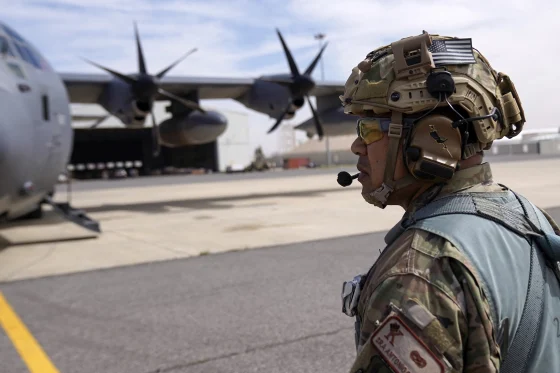
Recent days have seen a severe escalation in military tensions between the United States and Iran, triggered by a deadly attack in Jordan that claimed the lives of two American service members. This incident marks a significant turning point in an ongoing struggle between the two nations, characterized by mutual hostilities and reciprocal actions that have primarily centered around U.S. military presence in the region.
The attack occurred on a Friday when Iranian ballistic missiles and drones were launched at U.S. forces stationed in Jordan. As a result, two American soldiers were confirmed dead, and one additional service member has been reported missing in action. While U.S. Central Command (CENTCOM) has been tight-lipped about the incident, not disclosing the specific location or full details surrounding the assault, they did confirm that four other soldiers were evacuated and later discharged after receiving medical treatment. This attack not only highlighted the growing threat posed by Iranian military capabilities but also underscored the risks faced by U.S. personnel in volatile regions.
In direct response to the provocations, President Donald Trump authorized a series of retaliatory airstrikes against Iranian military targets on Saturday. CENTCOM affirmed that these strikes were executed to quickly address the attacks on American forces and to diminish Iran’s capacity to threaten maritime navigation, particularly through the strategically vital Strait of Hormuz. This decision marks a significant escalation in military engagement and highlights the U.S. commitment to protecting its forces and interests abroad.
The airstrikes have continued for several consecutive nights, representing a remarkable display of military assertiveness. Targets of these U.S. strikes included Iranian air defense installations, military surveillance facilities, and locations used for storing drones and missiles. Each night of targeted operations further illustrates the severity of the escalated conflict and the U.S. determination to counter Iranian aggression in the region.
Simultaneously, Iranian media has reported a wave of drone offensives aimed at disrupting U.S. military operations. Notably, Iranian forces reportedly targeted military sites in neighboring Kuwait, claiming that the intensity of their assaults would undermine U.S. military efforts throughout the Gulf region. Kuwait’s military authorities confirmed that their defense systems successfully engaged these threats, which indicates that the situation is precarious and evolving rapidly.
Further complicating the military landscape, Bahrain reported that its military had to intercept an Iranian missile aimed at its territory. This reflects the broader implications of the conflict, as U.S. allies in the region face potential repercussions from the escalating military actions. Regional stability is delicately balanced, with several countries positioned near the operational theaters of U.S. and Iranian military forces.
In Jordan, the local military actively intercepted multiple Iranian missiles directed at the kingdom, demonstrating both a proactive defense posture and the immediate threat posed by Iranian military capabilities. The successful interception underscores the complexity and challenges faced by countries in the region that are caught between the U.S. and Iranian military confrontations.
The backdrop to this escalating conflict is rooted in a collapsed ceasefire agreement that had previously been in place. The breakdown led to an exceptionally volatile week marked by a series of reciprocal military strikes. Iran has not only targeted U.S. forces but has also made aggressive moves against American allies, amplifying fears in the region over an impending broader military engagement.
The Islamic Revolutionary Guard Corps (IRGC) in Iran has publicly claimed responsibility for destroying at least two U.S. fighter jets during these recent clashes; however, independent verification of these claims remains absent, leaving an air of uncertainty around the veracity of such announcements. The information vacuum creates an environment ripe for speculation, further intensifying existing tensions.
This increase in hostilities highlights the risk of miscalculations on both sides, which could lead to unintended escalations and broader conflict. For the U.S., these events pose a significant challenge to national security strategy in the Middle East, particularly in light of the ongoing operations aimed at countering Iranian influence across the region.
As the situation continues to unfold, stakeholders and military officials express deep concern regarding the long-term consequences of these actions. Diplomatic solutions appear increasingly elusive, and the prospect of a sustained military confrontation looms large in the geopolitical landscape.
In summary, the tragic deaths of American service members in Jordan have catalyzed a dramatic shift in U.S.-Iran relations, pushing both nations into a cycle of escalating military confrontation. With a complex web of alliances and enmities shaped by years of conflict, the international community watches closely as both sides navigate this increasingly dangerous scenario. Moving forward, the actions taken will likely shape not only the immediate regional dynamics but also the broader geopolitical picture in the Middle East for years to come.