



Glycemic Index vs. Glycemic Load: A Simple Guide for Newly Diagnosed Type 2 Diabetics
Glycemic Index vs. Glycemic Load: A Simple Guide for Newly Diagnosed Type 2 Diabetics
Introduction: Understanding the Difference
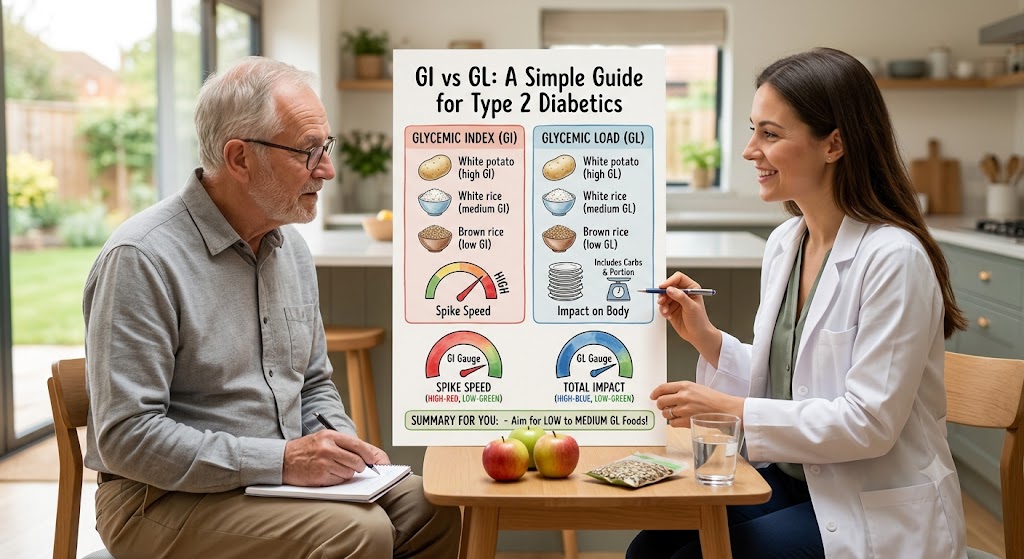
If you’ve recently been diagnosed with Type 2 diabetes, you’ve probably heard the terms Glycemic Index (GI) and Glycemic Load (GL). While they sound similar, they measure different things—and understanding both can help you make smarter food choices.
The Glycemic Index (GI) measures how quickly a carbohydrate-containing food raises blood sugar levels. Glycemic Load (GL) goes one step further by considering both the Glycemic Index and the amount of carbohydrates in a typical serving. Because it reflects real-world portion sizes, many healthcare professionals consider Glycemic Load a more practical tool for daily meal planning.
Learning the difference can make managing blood sugar less confusing and help you enjoy a balanced diet without feeling overly restricted.
Glycemic Load for Diabetes: Side-by-Side Comparison
| Feature | Glycemic Index (GI) | Glycemic Load (GL) |
|---|---|---|
| What it measures | How quickly carbohydrates raise blood sugar | The overall blood sugar impact of a normal serving |
| Formula | Based on 50 grams of available carbohydrates | GL = (GI × Net Carbs in Serving) ÷ 100 |
| Focus | Carbohydrate quality | Carbohydrate quality and quantity |
| Best Used For | Comparing similar carbohydrate foods | Planning realistic meals and portion sizes |
| Real-Life Accuracy | Moderate | Higher |
What Is the Glycemic Index?
The Glycemic Index ranks foods on a scale from 0 to 100 according to how quickly they raise blood glucose after eating.
Foods are generally grouped into three categories:
Low GI (55 or less)
These foods digest more slowly and typically produce a gradual increase in blood sugar.
Examples include:
- Lentils
- Chickpeas
- Steel-cut oats
- Apples
- Most non-starchy vegetables
Medium GI (56–69)
Foods in this range have a moderate effect on blood sugar.
Examples include:
- Brown rice
- Sweet corn
- Whole wheat pita bread
High GI (70 or higher)
These foods tend to digest rapidly and can lead to quicker blood sugar spikes.
Examples include:
- White bread
- Instant mashed potatoes
- Sugary breakfast cereals
- White rice
GI is useful for comparing foods but doesn’t account for the amount typically eaten.
Glycemic Load for Diabetes: What Is Glycemic Load?
Glycemic Load combines two important factors:
- How quickly carbohydrates raise blood sugar (GI)
- How many carbohydrates are actually in one serving
The formula is:
GL = (GI × Net Carbs in Serving) ÷ 100
GL categories include:
- Low: 10 or less
- Medium: 11–19
- High: 20 or more
Because GL considers serving size, it often gives a more realistic picture of how a meal affects blood sugar.
Why Is Glycemic Load More Accurate for Diabetics?
This is one of the most common questions asked after a diabetes diagnosis.
The best example is watermelon.
Watermelon has a relatively high Glycemic Index, meaning the carbohydrates it contains are absorbed quickly.
However, watermelon is made up mostly of water and contains relatively few carbohydrates in a typical serving.
As a result, its Glycemic Load is low, meaning one serving has a much smaller effect on blood sugar than its GI alone might suggest.
This example demonstrates why Glycemic Load is often considered more useful for everyday meal planning.
Instead of focusing only on how fast carbohydrates are absorbed, GL considers how much carbohydrate you’re actually eating.
Low Glycemic Foods That Support Better Blood Sugar Management
Many healthy foods naturally have a low Glycemic Load.
These include:
- Leafy greens
- Broccoli
- Cauliflower
- Lentils
- Black beans
- Chickpeas
- Greek yogurt (unsweetened)
- Berries
- Apples
- Pears
- Almonds
- Walnuts
- Avocados
- Quinoa
- Steel-cut oats
These foods often contain fiber, protein, or healthy fats that help slow digestion and reduce rapid blood sugar spikes.
Type 2 Diabetes Diet: Smart Low-GL Food Swaps
Small substitutions can make a meaningful difference over time.
Try these simple swaps:
- White rice → Quinoa
- White bread → Whole grain bread
- Sugary cereal → Steel-cut oats
- Regular pasta → Chickpea pasta
- White potatoes → Sweet potatoes
- Potato chips → Roasted chickpeas
- Fruit juice → Whole fruit
- Sugary yogurt → Plain Greek yogurt with berries
- White tortillas → Whole wheat tortillas
- Candy → Mixed nuts
These swaps increase fiber and nutrients while reducing the overall Glycemic Load of meals.
Blood Sugar Management Tips Beyond GI and GL
GI and GL are helpful tools, but they are only one part of diabetes management.
For better blood sugar control:
Balance every meal
Include protein, healthy fat, and fiber with carbohydrates.
Watch portion sizes
Even healthy foods can raise blood sugar if eaten in very large amounts.
Stay active
Frequent exercise improves the way your body uses insulin.
Monitor your response
People respond differently to foods. Keeping a food and glucose log can help identify personal patterns.
Work with your healthcare team
A registered dietitian or certified diabetes educator can help create a meal plan tailored to your needs.
Recent Developments in Diabetes Nutrition
Nutrition guidance has evolved significantly in recent years.
Experts increasingly recognize that there is no single “perfect” eating pattern for everyone with Type 2 diabetes. Instead, personalized nutrition plans that emphasize whole foods, high-fiber carbohydrates, lean proteins, and healthy fats are becoming the standard approach.
Continuous glucose monitors (CGMs) are also helping many people understand how specific foods affect their blood sugar in real time. These insights allow individuals to make more informed dietary choices based on their own responses rather than relying solely on general food rankings.
Researchers also continue studying how meal timing, food combinations, and gut health influence blood glucose control, offering promising directions for future diabetes care.
Expert Analysis
For someone newly diagnosed with Type 2 diabetes, focusing exclusively on the Glycemic Index can sometimes be misleading. A food with a high GI may have a low Glycemic Load because it contains relatively few carbohydrates per serving, while a low-GI food eaten in excessive quantities can still contribute to elevated blood sugar.
The most effective approach combines GI and GL with portion control, balanced nutrition, regular physical activity, and ongoing blood glucose monitoring. Rather than eliminating carbohydrates entirely, choosing nutrient-dense, high-fiber options and eating appropriate serving sizes can support better long-term health and make diabetes management more sustainable.
What Happens Next?
As diabetes research advances, nutrition recommendations are expected to become even more personalized. Wearable devices, digital health apps, and AI-powered meal planning tools may help people predict how specific foods affect their blood sugar before they eat.
Healthcare providers are also placing greater emphasis on individualized meal planning instead of rigid dietary rules. This shift empowers people with Type 2 diabetes to build eating habits that fit their preferences, culture, and lifestyle while supporting healthy blood glucose levels.
Download Your Low-GL Meal Planning Checklist
Want to make grocery shopping and meal planning easier?
Create or download a simple Low Glycemic Load Food Checklist that includes healthy carbohydrate swaps, portion-size reminders, and meal-building tips. Keeping a printable checklist in your kitchen can make healthy choices quicker and more consistent.
Frequently Asked Questions
1. Which is more important, Glycemic Index or Glycemic Load?
Both are useful, but Glycemic Load is generally considered more practical because it accounts for serving size as well as how quickly carbohydrates raise blood sugar.
2. Can I eat high-GI foods if I have Type 2 diabetes?
Yes. High-GI foods can fit into a balanced meal when eaten in moderation and paired with protein, fiber, or healthy fats to reduce their overall impact on blood sugar.
3. Is watermelon bad for diabetes?
Not necessarily. Although watermelon has a high Glycemic Index, it has a low Glycemic Load in a normal serving because it contains relatively few carbohydrates.
4. Do low-GI foods always have a low Glycemic Load?
No. A low-GI food eaten in a large portion can still have a moderate or high Glycemic Load due to the total amount of carbohydrates consumed.
5. Should I count carbohydrates or use Glycemic Load?
Most healthcare professionals recommend considering both. Counting carbohydrates helps manage intake, while Glycemic Load provides additional context about how a typical serving may affect blood sugar.
Conclusion
Understanding the difference between Glycemic Index and Glycemic Load can make diabetes management much less overwhelming. While GI measures how quickly carbohydrates raise blood sugar, GL offers a more complete picture by including the amount of carbohydrates in a typical serving.
For most people newly diagnosed with Type 2 diabetes, focusing on balanced meals, choosing lower-GL foods, practicing portion control, and working with healthcare professionals provides a practical path toward healthier blood sugar management. By using these tools together, you can make informed food choices that support both your immediate glucose goals and your long-term health.
Research & Medical References
- Harvard Health – The Lowdown on Glycemic Index and Glycemic Load
Harvard Health: The Lowdown on Glycemic Index and Glycemic Load - PubMed – International Tables of Glycemic Index and Glycemic Load Values (2021)
International Tables of Glycemic Index and Glycemic Load Values 2021 - PubMed – Glycemic Index, Glycemic Load, Carbohydrates, and Type 2 Diabetes (Systematic Review & Meta-analysis)
Systematic Review: GI, GL, and Type 2 Diabetes - Oregon State University – Glycemic Index and Glycemic Load
Glycemic Index and Glycemic Load Guide - PubMed – Glycemic Impact, Glycemic Index, and Glycemic Load: Definitions and Implications
Glycemic Impact, GI, and GL Research Paper