



'The Bear' Concludes Four-Season Run With Focus on Family, Loss and New Beginnings
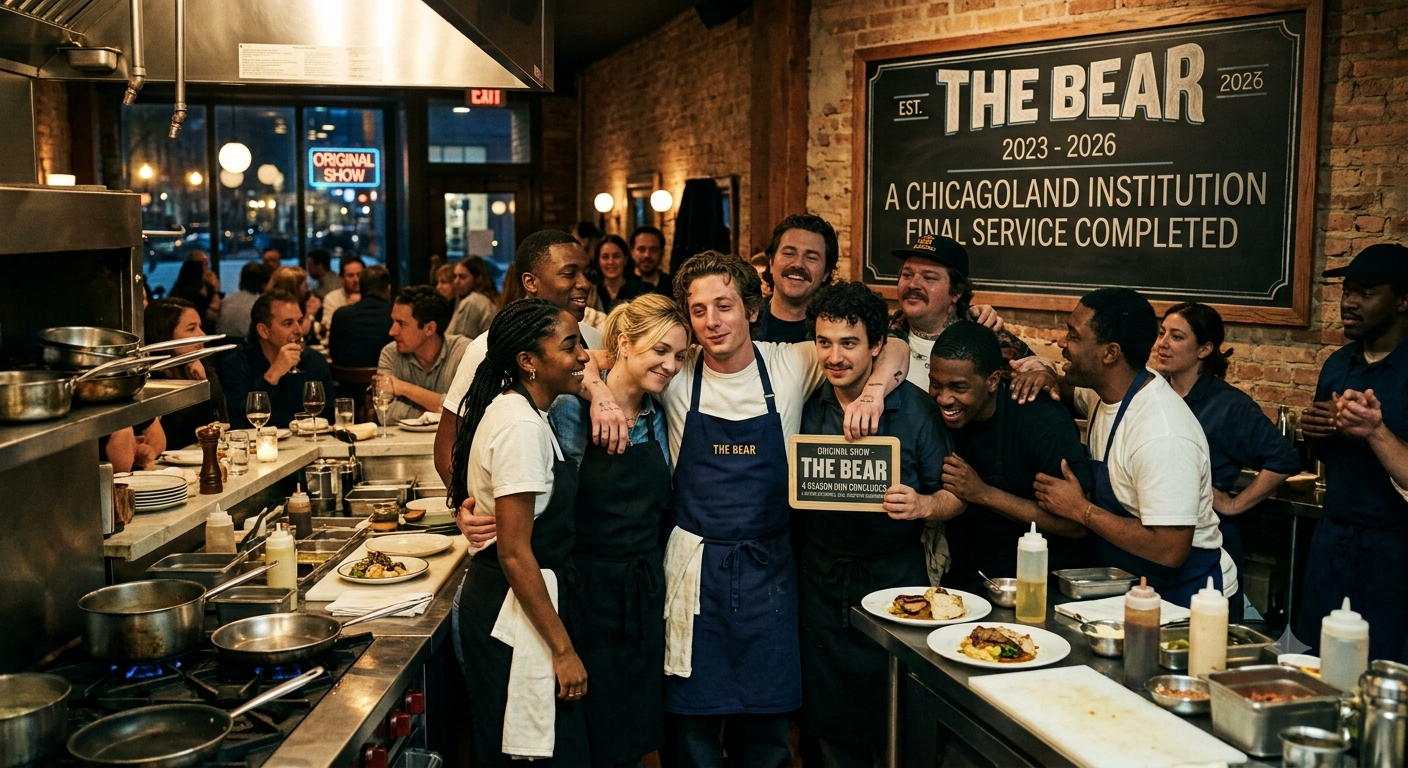
The Bear Final Season Review: Read our review of The Bear final season as Jeremy Allen White and Ayo Edebiri conclude the acclaimed series with emotional storytelling, character growth and a memorable finale.
‘The Bear’ Ends Its Run with a Character-Driven Final Season
The Bear Final Season Review: The final season of The Bear brings the award-winning television drama to a close, concluding the story of chef Carmen “Carmy” Berzatto and his colleagues after four seasons centered on the pressures of restaurant life, family relationships and personal recovery.
Since its premiere, the FX series has built a reputation for portraying the fast-paced environment of professional kitchens while examining the emotional challenges faced by those working within them. Created by Christopher Storer, the show follows Carmy, a fine-dining chef who returns to Chicago following the death of his brother to manage the family’s struggling sandwich shop. Over time, the business evolves into an ambitious restaurant, forcing its staff to confront both professional expectations and personal conflicts.
The final season continues those themes, focusing on the consequences of decisions made throughout the series rather than relying on dramatic plot twists. Instead, the story emphasizes character development and the ongoing effort required to maintain relationships inside and outside the workplace.
Jeremy Allen White returns as Carmy, whose leadership remains shaped by grief, perfectionism and the demands of operating a high-pressure kitchen. Throughout the season, the character faces difficult questions about balancing excellence with stability. Rather than presenting easy solutions, the series depicts gradual personal change through everyday interactions with colleagues, friends and family members.
Ayo Edebiri reprises her role as Sydney Adamu, whose professional ambitions become a central storyline in the final episodes. As a talented chef seeking greater responsibility, Sydney must weigh career opportunities against loyalty to the restaurant she helped build. Her decisions reflect broader questions about leadership, mentorship and professional growth within the hospitality industry.
Supporting cast members also receive meaningful conclusions to their storylines. Long-running conflicts among restaurant staff gradually move toward resolution, while several characters confront personal challenges that have remained unresolved throughout previous seasons. These developments contribute to a finale that prioritizes emotional closure over spectacle.
One of the defining characteristics of The Bear has been its commitment to portraying restaurant work with attention to detail. The final season continues to depict the realities of food preparation, service and kitchen management through tightly choreographed sequences that reflect the speed and pressure of professional cooking. Rather than using the restaurant simply as a backdrop, the series presents it as a workplace where personal and professional lives frequently intersect.
The show also revisits the lasting impact of family trauma. Carmy’s struggle to process the death of his brother remains central to the narrative, influencing his leadership style and relationships with those around him. Instead of treating grief as a problem that can be resolved quickly, the series portrays it as an ongoing process that affects decision-making, communication and emotional well-being.
Mental health remains another prominent theme throughout the final season. Episodes examine anxiety, burnout and emotional exhaustion without reducing these issues to simple plot devices. The series illustrates how demanding work environments can amplify existing pressures while also showing the importance of communication and support among colleagues.
The depiction of workplace stress reflects concerns that extend beyond television drama. Restaurant employees have long reported challenges related to long hours, physical demands and high expectations. By incorporating these realities into its storytelling, The Bear has contributed to broader discussions about working conditions in the hospitality industry.
Visually, the final season maintains the production style established in earlier installments. Handheld camera work, rapid editing and close-up shots continue to create an atmosphere that mirrors the intensity of a busy kitchen. The series also uses quieter moments to contrast with its fast-paced scenes, allowing conversations and character interactions to carry much of the emotional weight.
Chicago remains an important part of the show’s identity. Beyond serving as the setting, the city is integrated into the narrative through neighborhood locations, local businesses and cultural references that reinforce the authenticity of the story. The production’s consistent use of real locations has helped distinguish it from more conventional workplace dramas.
Music also continues to play a significant role in shaping the tone of the series. Carefully selected tracks accompany both moments of tension and scenes of reflection, complementing the emotional rhythm without overwhelming the storytelling.
Throughout its run, The Bear has received recognition for its writing, directing and performances. Jeremy Allen White and Ayo Edebiri have both earned industry awards for their work, while the series has become a frequent contender during television awards seasons. Critics have consistently cited its combination of realistic workplace drama, family storytelling and character-focused writing as key factors behind its success.
The show’s influence extends beyond awards recognition. Its portrayal of professional kitchens has generated renewed public interest in restaurant culture while encouraging discussion about leadership, workplace expectations and employee well-being. Although the series is fictional, many chefs and hospitality workers have noted similarities between its depiction of restaurant operations and their own experiences.
The conclusion avoids offering definitive answers for every character. Instead, the finale acknowledges that personal growth often continues beyond a single moment of resolution. Relationships evolve, careers change and challenges remain, reflecting the uncertainty that defines much of adult life.
By ending its story through character development rather than dramatic spectacle, The Bear remains consistent with the approach that established its reputation. The series concludes with a focus on resilience, responsibility and the complexities of working alongside people whose personal lives are often inseparable from their professional ambitions.
With its final season, The Bear closes a chapter that combined workplace drama with family storytelling and emotional realism. As the series leaves television, it does so as a production that explored not only the demands of running a restaurant but also the human experiences that exist behind every service, every meal and every attempt to move forward after loss.
Tags: The Bear Final Season Review,The Bear Final Season Review,The Bear Final Season Review,The Bear Final Season Review,The Bear Final Season Review,The Bear Final Season Review,The Bear Final Season Review,The Bear Final Season Review,The Bear Final Season Review,The Bear Final Season Review,