The "Cicada" in the Room: Navigating the 2026 Spring Viral Surge | Expert Health Guide
Immune Evasion in BA.3.2: Why Past Infections May Not Protect You
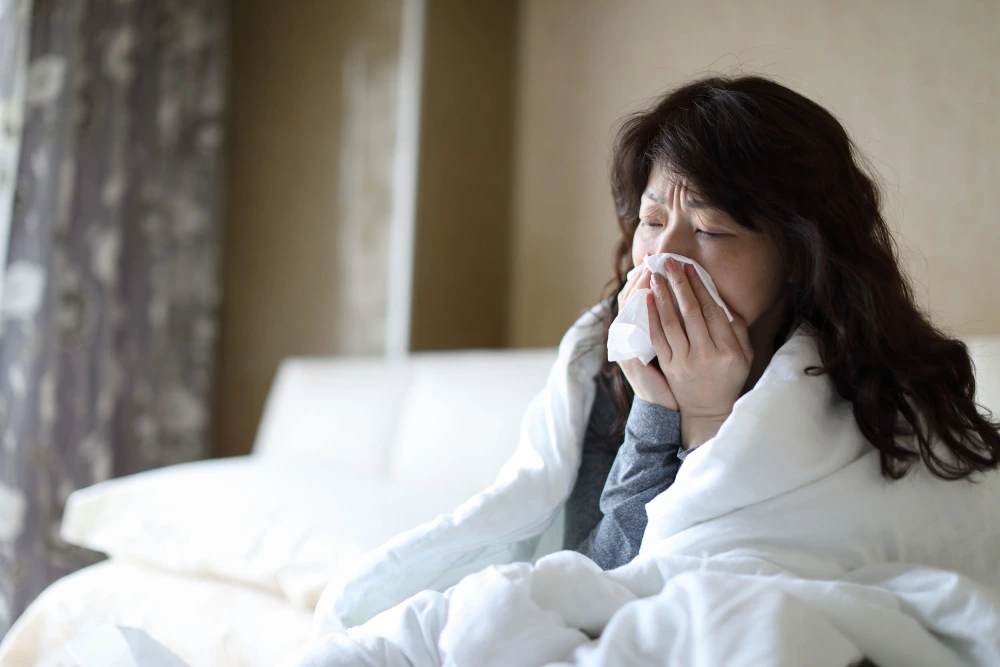
Just when we thought we could swap our face masks for sun hats, the 2026 respiratory season has thrown a curveball. While the world has largely moved into a “post-pandemic” rhythm, nature remains remarkably busy. Currently, a complex cocktail of illnesses is making the rounds: seasonal flu, a persistent stomach bug, and a new COVID-19 variant that health experts are calling BA.3.2, more colloquially known as “Cicada.“
If you’ve noticed a sudden uptick in coworkers “slacking” out or school attendance dropping, you aren’t imagining it. Here is everything you need to know about the current viral landscape and how to protect yourself.
The Arrival of the “Cicada” Variant (BA.3.2)
The most talked-about guest at this year’s viral party is the BA.3.2 variant. Its nickname, “Cicada,” is as poetic as it is descriptive. Much like the insect that stays underground for years before emerging in massive numbers, this variant was first identified in late 2024 in South Africa, seemingly vanished, and has now resurfaced with a vengeance in 2026.
What makes it different?
Unlike previous “slow-burn” variants, Cicada is highly mutated. It carries over 70 mutations in its spike protein, which is the part of the virus that vaccines and natural immunity use to recognize it.
- Immune Evasion: Because of these mutations, Cicada is better at slipping past the defenses built up by older vaccines or previous infections.
- The Silver Lining: While it is more “slippery,” there is currently no evidence that it causes more severe disease than previous Omicron strains. For most, it remains an upper-respiratory nuisance rather than a life-threatening crisis.
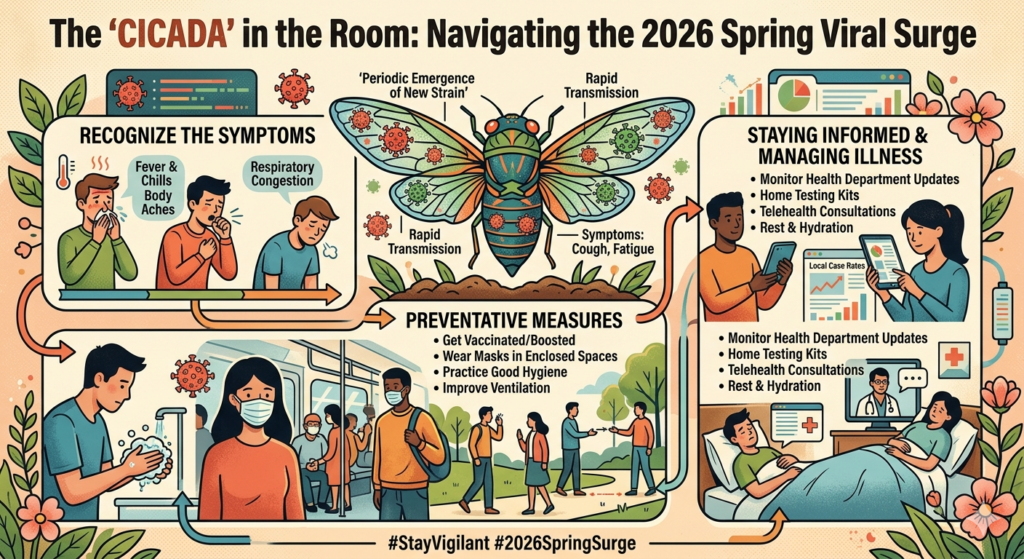
Symptoms to Watch For:
- Scratchy or sore throat (often the first sign)
- Dry, persistent cough
- Fatigue that feels “bone-deep”
- Headaches and muscle aches
- Mild gastrointestinal distress (nausea or loss of appetite)
Flu and RSV: The Early Bloomers
In an unusual twist for 2026, the flu season started earlier than historical averages. While Influenza A and B typically peak in mid-winter, we are seeing sustained activity well into April.
Simultaneously, Respiratory Syncytial Virus (RSV)—which usually hits its stride in February—saw a delayed start this year, meaning it is peaking right now. This “viral overlap” is creating a heavy burden on clinics and urgent care centers. For adults, RSV might feel like a bad cold, but for infants and the elderly, it remains a serious risk for bronchiolitis and pneumonia.
The “Nasty” Stomach Bug: Not Just a Cold
If the respiratory symptoms don’t get you, the current gastrointestinal outbreak might. Health departments are reporting a spike in Norovirus-like symptoms across several regions. Often mistaken for the “stomach flu” (which isn’t actually flu), this bug is notoriously hardy.
Key features of the current bug:
- Sudden Onset: You can go from feeling fine to being incapacitated in a matter of hours.
- Resilience: Unlike COVID-19, this virus isn’t easily killed by alcohol-based hand sanitizers. Soap and water are the only way to physically wash the virus off your hands.
- Hydration is Critical: The primary danger of this bug is rapid dehydration, especially in children and older adults.
How to Tell the Difference
With so many “bugs” circulating, it’s hard to know what you’ve caught. Here’s a quick comparison guide:
Feature | BA.3.2 (Cicada) | Seasonal Flu | Stomach Bug |
Primary Symptom | Sore throat & fatigue | High fever & body aches | Vomiting & diarrhea |
Cough? | Yes, persistent | Yes, dry | No |
Fever? | Low to moderate | High (101°F+) | Rare or low |
Recovery Time | 5–10 days | 7–14 days | 24–48 hours |
Practical Prevention: Beyond the Basics
It might feel like we’ve heard the “wash your hands” speech a thousand times, but with the specific mix of BA.3.2 and the stomach bug, your strategy needs to be targeted.
- Upgrade the Mask in Crowds: With the Cicada variant’s high transmissibility, a simple cloth mask may not cut it. If you are in high-risk areas (airports, crowded transit), an N95 or KF94 provides the necessary seal against highly mutated subvariants.
- The “20-Second” Rule for G.I. Protection: Remember, hand sanitizer does very little against the current stomach bug. If you’ve been in a public space, wash your hands with soap and water before touching your face or eating.
- Ventilation is Your Friend: Spring is here—open the windows! Improving airflow is one of the most effective ways to dilute viral particles of both Flu and COVID-19.
- Stay Home (Truly): The Cicada variant is noted for having a “rebound” feel where you feel better on day three only to feel worse on day five. Don’t rush back to the gym or office until you are 24 hours symptom-free without medication.
Final Thoughts
The emergence of the “Cicada” variant is a reminder that while our lives have returned to normal, the microscopic world is still innovating. We aren’t back in 2020, but we are in a new era of “viral awareness.”
By staying hydrated, keeping up with the latest boosters (which still provide significant protection against severe illness), and respecting the “24-hour rule” when sick, we can navigate this spring surge without letting it dampen the season. Stay safe, stay informed, and keep those hands washed!


5rznm1
1q36xu
ahtm9a
sp9c5v
6qcwtj
a8x3bo
Been having some fun on betvnd9 lately. It’s worth a look if you want some fresh options. See for yourself: betvnd9
Looking to place some bets? Gamdom Bet offers a solid platform. Good selection of games and betting options. My advice? Go check out gamdom bet before you bet anywhere else.