



US Intelligence Warns of Possible Iranian Dirty Bomb or Chemical Attack Plot in Washington
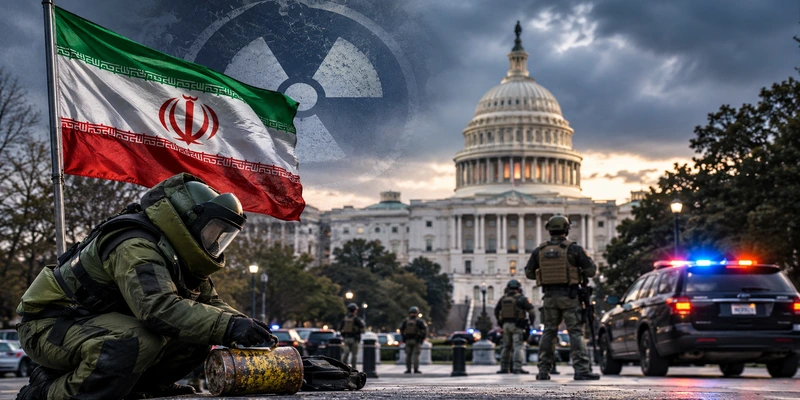
U.S. intelligence agencies have uncovered information suggesting Iran is exploring plans to target senior Trump administration officials in Washington, D.C., using a radiological dirty bomb or chemical weapon, according to seven U.S. officials familiar with the intelligence.
The officials stressed that the reported planning does not indicate an imminent attack. Instead, they described it as an effort by Tehran to preserve potential options amid escalating tensions with Washington. However, two sources said the intelligence includes specific locations and potential targets, prompting U.S. agencies to step up contingency planning.
White House spokesperson Lauren Bis said the administration was monitoring potential threats but emphasized that there were no credible threats to the U.S. homeland at this time.
President Donald Trump said Tuesday that Iran would face unprecedented consequences if it attacked Washington. He added that his administration was treating the reported threat seriously.
Homeland Security Secretary Markwayne Mullin characterized the intelligence as aspirational, saying it did not represent a new threat.
The reported planning comes as Iran faces continued U.S. military strikes and an economic blockade, while diplomatic efforts to end the conflict remain uncertain. U.S. officials view the intelligence as a possible indication that Tehran is considering expanding its response beyond the Middle East, although there is no confirmed evidence that Iranian leaders have authorized an attack.
One official said intelligence analysts remain divided over whether Iran has the personnel and operational capacity to carry out such a plot.
Two sources said U.S. officials had held several meetings in recent days to assess the potential threat and coordinate preventive measures. One described the preparations as a prudent response to the intelligence.
Separately, security concerns involving Iran have reportedly prompted the Secret Service to relocate Treasury Secretary Scott Bessent to military housing.
U.S. officials said Iran could potentially rely on individuals already inside the country rather than sending operatives from abroad. A dirty bomb combines conventional explosives with radioactive material to disperse contamination. Although such a device does not produce a nuclear explosion, its use could cause significant disruption, public panic and long-term contamination.
One source said U.S. intelligence had intercepted communications in which Iranian figures claimed that bomb-making materials were already stored inside the country. Officials remain divided over the credibility of those claims.
However, some national security officials believe materials that could potentially be used in radiological or chemical attacks may have been brought into the United States long before the current conflict. The sources cautioned that Iran’s ability to carry out such an operation may not have materially changed; rather, the incentive to consider one may have increased.
The Defense Department referred questions to the Office of the Director of National Intelligence, which declined to comment.
Iran rejected allegations involving chemical weapons. A spokesperson for its U.N. mission in New York said Tehran considers the use of chemical weapons illegitimate under any circumstances and dismissed the accusations as false.
Iranian Foreign Ministry spokesperson Esmaeil Baghaei also accused those responsible for starting the conflict of attempting to create justification for further military aggression.
Despite the intelligence concerns, U.S. officials have not established that Iran has made a final decision to carry out an attack or that an operation is imminent.