



‘The Odyssey’ Review: Christopher Nolan’s Most Breathtaking Film Yet? Passion Shines in Every Frame
Christopher Nolan's The Odyssey Review Highlights a Perfect Blend of Art-House Passion and Blockbuster Scale
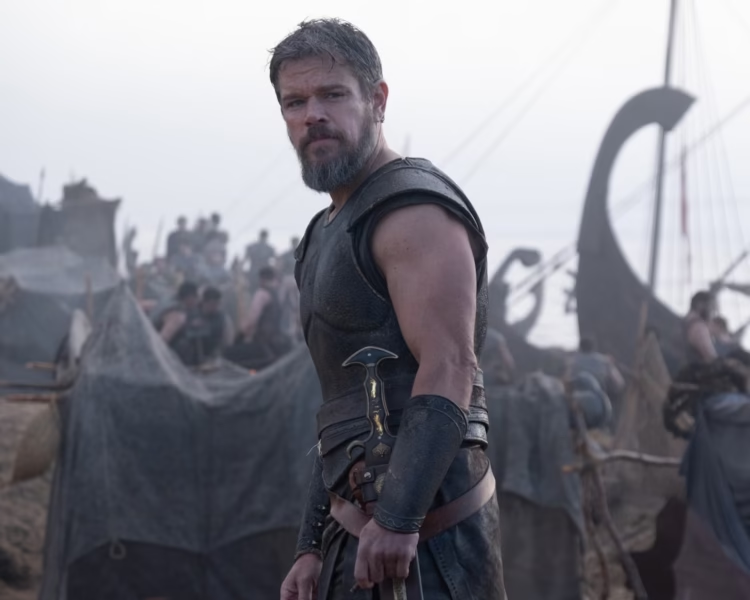
**Christopher Nolan’s *The Odyssey* Delivers Passion and Spectacle: A Review**
In the world of cinema, few filmmakers can ignite the same level of anticipation as Christopher Nolan. His latest project, *The Odyssey*, is already generating significant buzz, with early reviews highlighting its breathtaking visuals and emotional depth. Critics are universally praising the film, calling it “passion in every frame” and positioning it as one of the year’s most highly anticipated cinematic events.
**Nolan’s Bold Vision Takes Center Stage**
Nolan has consistently straddled the line between arthouse ingenuity and blockbuster appeal, a balance he appears to maintain in *The Odyssey*. Known for creating visually stunning films that challenge audiences intellectually and emotionally, Nolan has crafted an epic that intertwines grand spectacle with intimate storytelling.
Initial reactions from critics suggest that *The Odyssey* is more than a mere adventure film. Instead, they describe it as a meticulously crafted experience where each scene reflects Nolan’s characteristic attention to detail—from the stunning cinematography to the layered narrative and evocative production design. Reviewers have lauded the film’s emotional weight, emphasizing that its visual splendor does not overshadow the development of its characters or themes.
**A Growing Buzz in Entertainment Circles**
The excitement surrounding *The Odyssey* has intensified following the release of early reviews. Social media discussions have exploded, with film enthusiasts dissecting elements such as the film’s scale, emotional complexity, and remarkable visuals. As a result, *The Odyssey Review* has emerged as one of the hottest keywords in the entertainment industry.
Critics celebrate Nolan’s ability to take a beloved story and transform it into a modern cinematic experience without compromising artistic integrity. The film reportedly emphasizes practical filmmaking techniques, immersive sound design, and emotionally rewarding performances, making it a standout within the realm of blockbuster filmmaking.
**Key Highlights from Early Reviews**
– *The Odyssey* is receiving overwhelmingly positive feedback from critics.
– Reviews commend the film’s emotional storytelling paired with stunning cinematography.
– The narrative successfully merges artistic ambition with mainstream entertainment.
– Key talking points include the film’s visual achievements, sound design, and powerful performances.
– The film has become a focal point of discussion across entertainment news and social media platforms.
– Viewers have described it as visually ambitious while maintaining emotional resonance.
**What Sets *The Odyssey* Apart? **
Nolan’s films resonate due to his dedication to practical filmmaking and immersive storytelling. He frequently opts for real-world locations and large-scale practical sets over heavy reliance on CGI, creating authentic cinematic experiences. This commitment shines through in *The Odyssey*, as critics praise nearly every production aspect—from capturing breathtaking landscapes to delicately portraying intimate emotional moments.
At its core, the film is said to explore deeply human themes, including courage, resilience, loyalty, and hope. Critics believe this emotional foundation is what elevates *The Odyssey* beyond conventional blockbuster narratives.
**The Importance of *The Odyssey* in Today’s Landscape**
In a cinema landscape dominated by franchise films and superhero narratives, Nolan continues to champion original storytelling that resonates with both critics and mainstream audiences. Given the monumental success of his previous works, expectations for *The Odyssey* are sky-high. Emerging positive reviews indicate that Nolan has once again crafted a cinematic milestone that appeals to both dedicated film lovers and casual viewers.
As industry analysts observe, *The Odyssey* may signify a significant contribution to the evolving conversation around cinema, reaffirming the possibility of thought-provoking and personal storytelling within the blockbuster format.